Dedicated QA engineers inside the sprint: manual, automated, performance and device coverage on every project we deliver.
100%
Projects with dedicated QA
200+
Projects delivered end to end
97%
Clients who come back








Overview
A dedicated tester joins at scoping, writes the test strategy against business risk, and runs coverage inside each increment. Defects surface while the code is fresh, which is a fraction of the cost of finding them in production.
Every engagement includes
Services
Testing after the build costs more than testing during it. Our QA engineers sit in the same increments as the developers, so defects surface while the code is still fresh.
0
Projects with dedicated QA
0
Projects delivered end to end
0
Clients who come back
0
Years in business
Capabilities
The parts of the work we own outright: no subcontracting, no handover to a team you have not met.
Discuss your buildStructured test cases plus exploratory sessions that find what scripted runs miss.
What we deliver
Manual & automated testing
Combined coverage sized to the risk in each release.
API & integration testing
Contract testing across internal and third-party services.
Regression testing
Why Cloudus
Six things clients tell us made the difference, and the reasons they come back for the next build.
Scalable architecture for growth
From a first release to an enterprise platform, we design modular systems that grow with the business instead of forcing a rebuild in year two.
Agile, transparent collaboration
Two-week increments you can open and use, a single point of contact who knows the codebase, and no status reports standing in for working software.
One dedicated team
The same developers stay on your project. No shared resourcing, no rotation halfway through, no re-explaining decisions to a new face.
Related services
Our work
Products we delivered: the scope, the stack and the outcome.
A written scope, estimate and timeline before code starts.
Tech stack
The frameworks, tools and platforms our engineers use here, chosen per project against load, team size and cost, not by habit.
Automation
API & load
Process
Five stages, each with something you can see at the end of it.
Frequently asked questions
Timelines, technology, ownership and support, answered before you ask.
Tell us the use case or the constraint, and we will answer it specifically.








Regression suites in Playwright, Cypress and PHPUnit, wired into CI so they run on every change.
Contract and integration coverage across services and third-party dependencies.
Load and stress profiles built from realistic traffic, with findings tied to fixes.
The real device and browser matrix your analytics show, not an idealised one.
Suites that keep old behaviour honest as the product grows.
Performance testing
Load, soak and stress runs with actionable output.
Mobile app testing
Device-matrix coverage, including offline and low-bandwidth paths.
Usability testing
Task-based sessions that surface friction before launch.
Support & maintenance
Ongoing QA capacity attached to your release cycle.
QA built into the build
A dedicated tester on every project, manual and automated, running inside each increment rather than bolted on at the end.
Fixed scope, clear price
A written scope, estimate and timeline before code starts, revisited openly with you if reality changes, not quietly absorbed.
Support after launch
Maintenance, monitoring, patching and 24/7 response cover on the products we run. We are still there in year three.
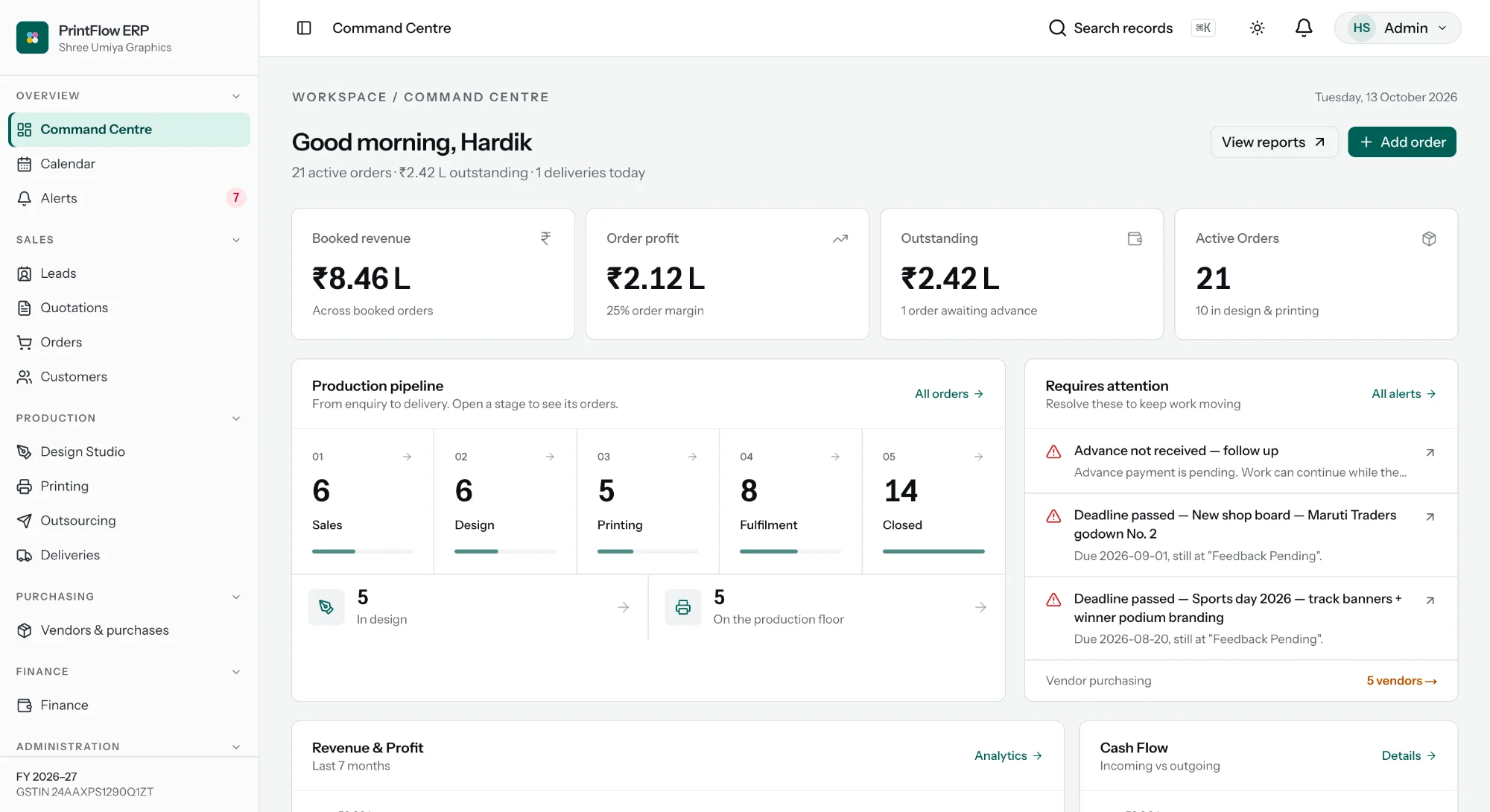
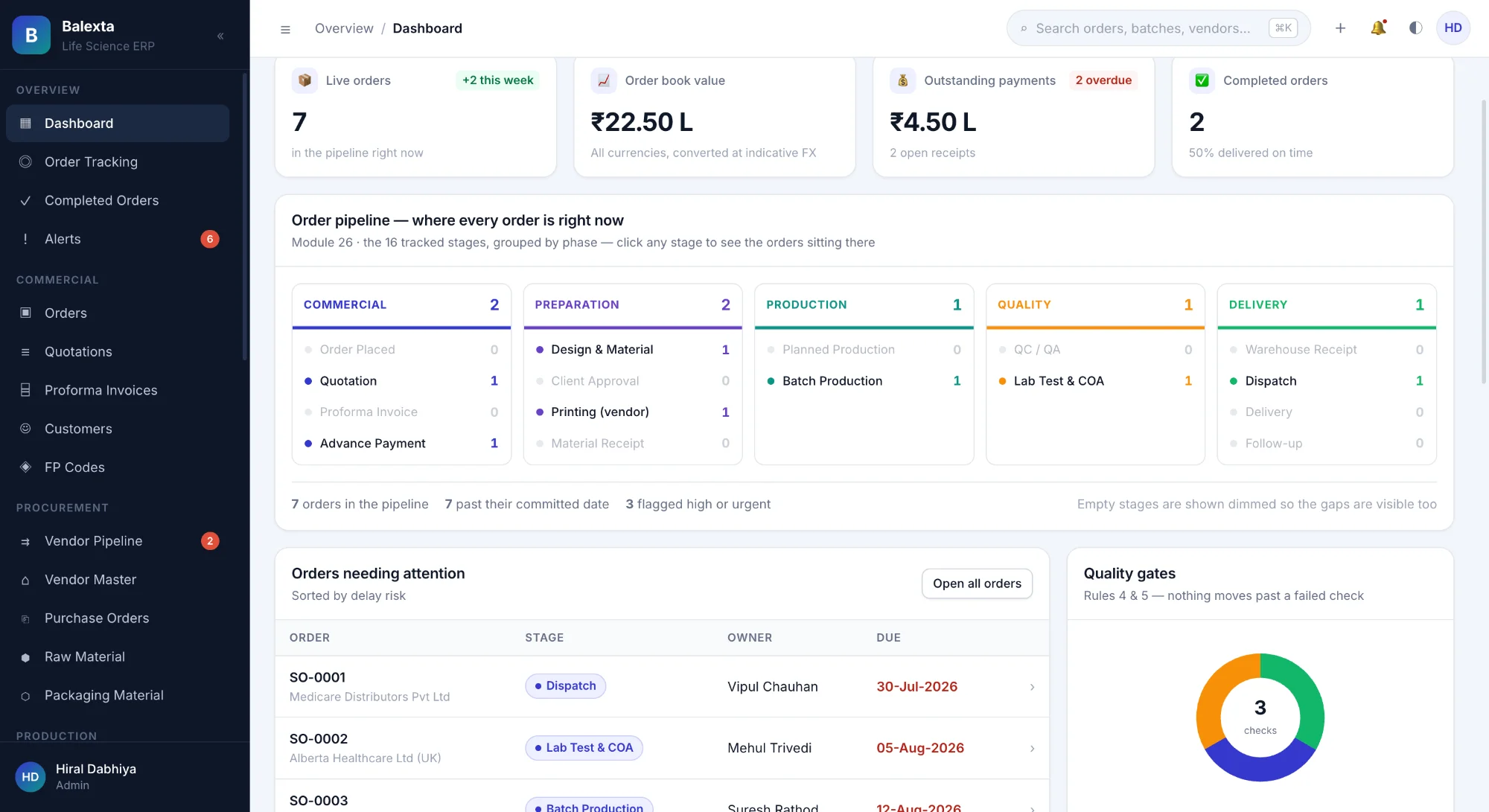
An operations system that follows every print job from enquiry to delivery, with real profit visible on each one.
View case study ↗Devices & CI
Workshops, written scope, estimate and timeline.
Flows and UI reviewed before development starts.
Two-week increments you can open and use.
Manual and automated testing inside each increment.
Release, monitoring and a maintenance plan.